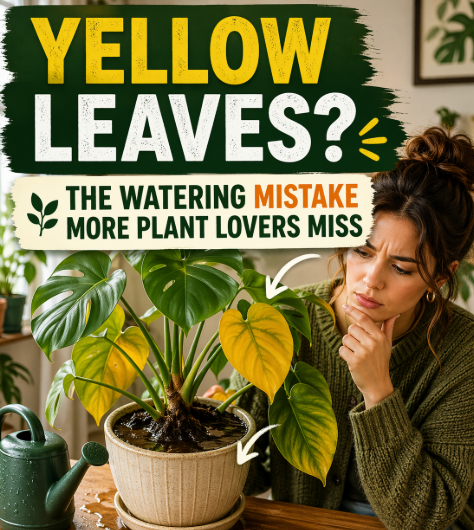
🌿 How to Check if Watering Is the Real Problem
Before changing everything, look at:
- Is the soil wet several inches down?
- Does the pot have drainage holes?
- Is water sitting in the saucer or outer pot?
- Is the room darker than you think?
- Are lower older leaves yellowing first?
These questions often reveal much more than a random internet trick ever will.
🪴 Practical Tips for Healthier Leaves
A stronger leaf-recovery routine often includes:
- watering only after checking the soil
- improving drainage
- giving the plant brighter indirect light if needed
- trimming badly damaged yellow leaves
- keeping the routine steady instead of dramatic
- letting the plant recover gradually
❓ Frequently Asked Questions
🌼 1. Do yellow leaves always mean overwatering?
No, but overwatering is one of the most common causes indoors.
🌼 2. Should I water more if leaves turn yellow?
Not automatically. First check the soil and root conditions.
🌼 3. Why does indoor light matter so much?
Because lower light means the plant uses water more slowly.
🌼 4. Can one yellow leaf be normal?
Yes. Older leaves sometimes fade naturally. The bigger issue is repeated yellowing.
🌼 5. What is the biggest watering mistake?
Watering on schedule without checking whether the soil actually needs it.
🌼 6. Does drainage really matter that much?
Yes. Poor drainage can keep roots wet too long and stress the plant.
🌼 7. Should I fertilize a yellowing plant right away?
Not always. If watering is the issue, fertilizer may not fix the real problem.
🌼 8. Why do decorative pots cause problems?
Because water can stay trapped around the root zone if it is not emptied properly.
🌼 9. How fast do leaves recover?
Usually gradually. New healthy growth matters more than expecting old yellow leaves to turn green again.
🌼 10. What is the smartest first step?
Check the soil, drainage, and light before changing anything else.
🌟 Final Thought
The reason some indoor plants keep turning yellow is often not mystery, bad luck, or weak fertilizer. It is a watering routine that no longer matches the plant’s real needs.
That is what makes this topic so useful.
Once plant owners stop watering by habit and start watering by observation, a lot of indoor plants begin to look stronger, steadier, and greener again.