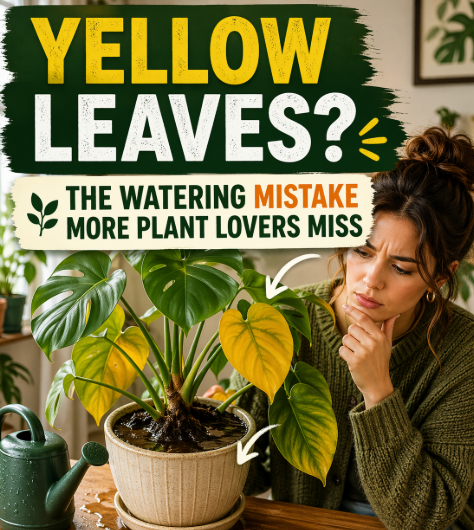
✨ Why Yellow Leaves Make Plant Owners Nervous So Fast
Few indoor plant problems get attention as quickly as yellow leaves.
The moment a healthy green plant starts fading into pale yellow, most people feel the same thing: confusion first, then worry. They water more. Or they water less. They move the pot. They check the window. They try a random plant trick they saw online. And very often, the real issue gets worse instead of better.
That is because yellow leaves are not always caused by one dramatic problem. In many homes, they are the result of a simple care mistake repeated over time. And one of the biggest reasons behind that mistake is watering.
This is exactly why more plant lovers are starting to look more closely at their watering habits instead of rushing toward quick fixes.
A yellow leaf is not just a color change. It is a signal. Sometimes the plant is stressed. Sometimes the roots are sitting too wet. Sometimes the soil is drying in the wrong pattern. Sometimes the owner is watering on a schedule that makes sense for people, but not for plants.
That is why this topic matters so much.
🪴 Why Watering Is Harder Than It Looks
A lot of people think watering should be the easiest part of plant care. After all, plants need water, so giving more water should help, right?
That sounds logical, but it is where many indoor plant problems begin.
Watering is not only about giving water. It is about:
- when you water
- how much you give
- how quickly the soil drains
- how much light the plant gets
- how often the pot actually dries out
- whether the roots are staying too wet for too long
This is why indoor plant owners often make mistakes even when they are trying to be careful. They see dry-looking topsoil and water again. They follow the same schedule every week even when temperatures change. They assume a thirsty-looking plant needs more water, when sometimes the roots are already stressed from too much moisture.
That is the trap.
🌼 Why Yellow Leaves Often Point to a Routine Problem
Yellow leaves do not always mean the plant is “dying.” But they often mean the routine needs attention.
In many homes, yellowing starts because:
- watering is too frequent
- the pot does not drain properly
- the soil stays dense and heavy
- the plant gets low light and cannot use moisture fast enough
- owners water by habit instead of checking the soil first
This is why the issue can feel so frustrating. The plant may have been “cared for” the whole time. The owner did not ignore it. In fact, many yellow-leaf plants belong to people who were trying too hard to be helpful.
That is an important lesson in indoor gardening. Good plant care is not about doing more. It is about doing the right things at the right time.
🏡 Why Indoor Plants Struggle More With Watering Mistakes
Outdoor plants usually have more airflow, more space, and more natural drying conditions. Indoor plants live in a very different environment.
Inside the home, things change:
- air can stay still
- pots dry more slowly
- decorative containers may trap moisture
- lighting may be weaker than people think
- cooler corners can keep soil damp longer
All of these factors make overwatering much easier than most people realize.
That is why yellow leaves are such a common indoor issue. The plant is not only reacting to water itself. It is reacting to the full environment around that water.
🌿 The Watering Mistake More People Are Starting to Notice
The most common watering mistake is simple:
watering too often before the plant actually needs it.
This happens when people:
- water on the same day every week no matter what
- do not check how deep the soil is drying
- assume yellow leaves mean thirst
- panic-water after seeing one bad leaf
- forget that different plants dry at different speeds
Once this starts happening, roots may stay too wet. The plant begins to struggle. Leaves lose their deep healthy color. And the owner often responds by adjusting everything except the real cause.
That is why this mistake keeps repeating.
💎 Premium vs. Weak Plant Care
A weaker plant routine often looks like:
- fixed watering days no matter the season
- decorative pots with trapped water
- no soil check before watering
- reacting emotionally to every leaf
- ignoring light levels
A stronger, more premium-feeling plant routine looks like:
- checking soil before watering
- using pots with drainage
- paying attention to room light and airflow
- adjusting care by season
- watching the plant’s pattern instead of guessing
This is what separates random care from smarter care. And smarter care almost always leads to healthier-looking plants.
⚠️ Common Mistakes People Make
The most common mistakes are:
- watering because the top of the soil looks dry
- not emptying decorative outer pots
- using heavy soil that stays wet too long
- ignoring weak indoor light
- thinking every yellow leaf needs fertilizer
- changing too many things at once
A yellow plant usually needs calm observation more than panic.