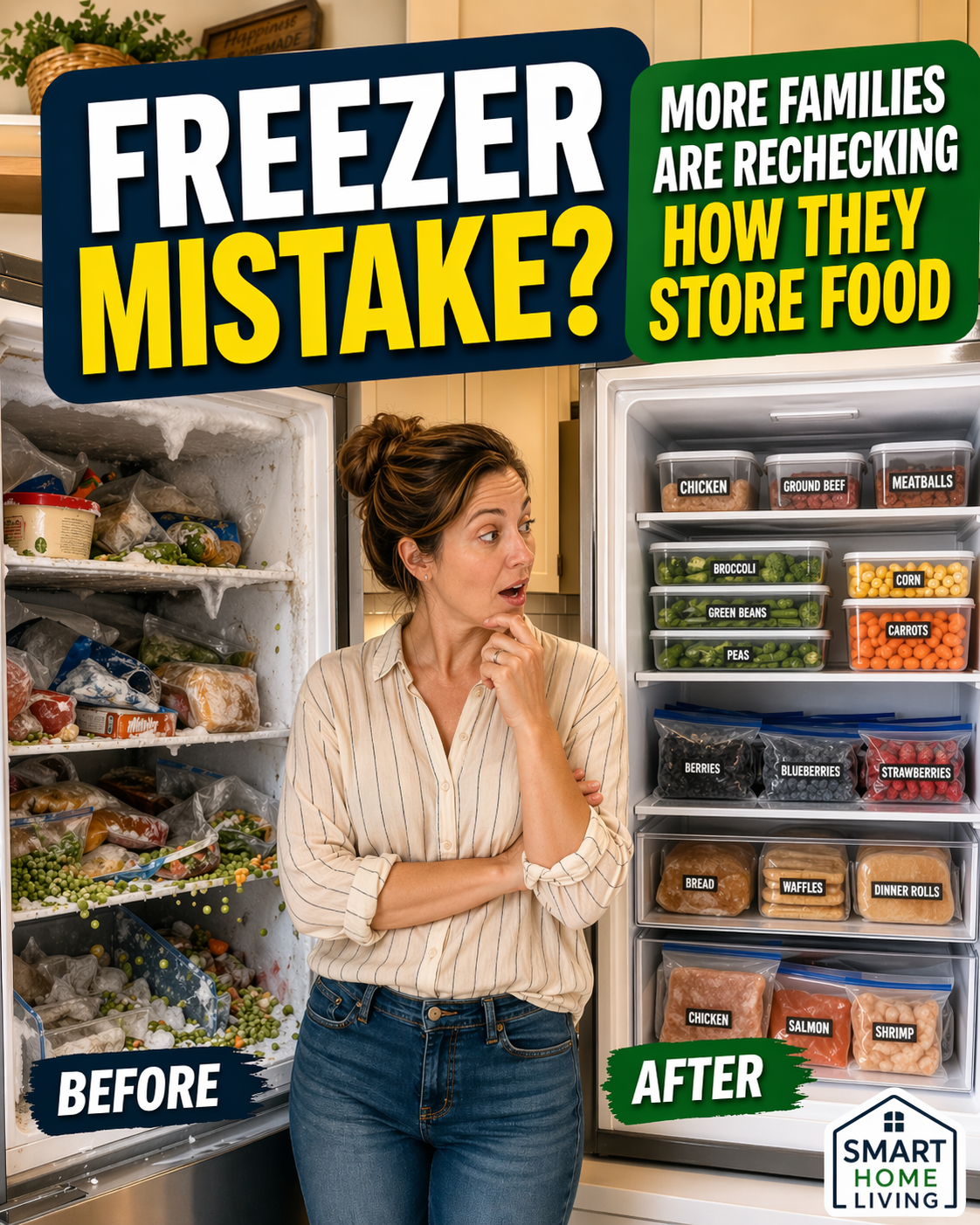
🏡 The Small Freezer Habit That Can Quietly Waste Food at Home
There is a familiar moment many families know too well. You open the freezer looking for something simple — maybe chicken for dinner, frozen vegetables for dinner, a bag of berries for breakfast, or bread you saved for later — and suddenly the whole space feels impossible to understand.
Packages are stacked in random directions. Older food is hidden behind newer food. A half-open bag of vegetables has spilled into the drawer. Something has freezer burn. Something else has no label. Somewhere in the back, there is probably a container nobody remembers putting there.
At first, it may seem like a small household problem. But over time, a messy freezer can quietly lead to wasted food, repeated grocery purchases, forgotten meals, and unnecessary stress during the week.
That is why more families are starting to recheck how they store food at home.
A freezer is not just a cold storage box. In a smart home routine, it becomes a money-saving tool, a meal-planning helper, and a way to make everyday cooking feel easier. But when it is disorganized, it can create the opposite effect.
Instead of helping the household save money, it hides what you already bought.
Instead of making dinner easier, it turns meal planning into a guessing game.
Instead of reducing waste, it allows food to disappear until it is no longer useful.
The good news is that most freezer problems do not require expensive containers, a huge kitchen, or a perfect organizing system. In many homes, the biggest change starts with one simple habit: storing food in a way that makes it easy to see, use, and rotate.
🧊 Why the Freezer Becomes Messy So Quickly
The freezer often becomes messy because people use it in a hurry. Groceries come home, the family is tired, and frozen items get pushed wherever there is space. A bag of chicken goes on top of vegetables. Leftovers go into a container without a label. Bread gets squeezed near ice packs. A new bag of berries lands in front of an older one.
Nothing looks serious in the moment. But after a few grocery trips, the freezer becomes layered with forgotten items.
This is one of the main reasons families accidentally buy food they already have. If frozen meat, vegetables, fruit, or bread are hidden behind clutter, the household may assume they are out and buy more. Then the new food gets placed in front, while the older food moves deeper into the freezer.
That is where the waste begins.
A smart freezer system does not have to look fancy. It simply needs to answer three questions quickly:
What do we have?
What needs to be used first?
Where does each type of food belong?
When the freezer cannot answer those questions visually, it becomes harder to save money at home.
💰 How a Messy Freezer Can Affect the Grocery Budget
Many families focus on grocery prices at the store, but the real savings often happen at home. Buying food on sale only helps if the food is actually used. Meal prepping only helps if the meals are easy to find. Freezing leftovers only helps if someone remembers what they are.
A messy freezer can lead to small losses that add up over time.
A forgotten pack of meat becomes freezer burned.
Vegetables get buried until they are icy and unappealing.
Leftovers sit too long because no one knows what is inside.
Families buy duplicates because they cannot see what they already own.
Meal plans fall apart because ingredients are hard to locate.
This is why freezer organization belongs perfectly inside the Smart Home Living niche. It connects directly to cleaner routines, smarter habits, less waste, and better home management.
A beautiful home is not only about decor. It is also about systems that make daily life smoother.
When the freezer is organized, dinner feels easier. Grocery shopping becomes more intentional. Food waste becomes easier to prevent. The kitchen feels more controlled.
That is the kind of small home improvement that actually changes daily life.
🧺 The Common Freezer Mistake More Families Are Rechecking
One of the most common freezer mistakes is storing food without zones.
When everything goes everywhere, the freezer becomes confusing very quickly. Meat, vegetables, bread, fruit, leftovers, snacks, and meal-prep containers all compete for space. Even if the freezer looks full, it may not be useful.
The better habit is to create simple freezer zones.
For example:
Meat and protein in one area.
Vegetables in another area.
Fruit in one container or drawer.
Bread and breakfast items together.
Leftovers in a visible section.
Quick meals or family favorites near the front.
This does not need to be complicated. Even one or two baskets can make a big difference. The goal is not perfection. The goal is visibility.
When each type of food has a place, the freezer becomes easier to use. You can open it, understand it, and make decisions faster.
That is what makes the difference between a freezer that stores food and a freezer that actually supports the household.
🍽️ The “Use First” Area That Helps Reduce Waste
One smart freezer habit is creating a small “use first” area. This can be a front shelf, a small bin, or one section of a drawer. It is where older items go so they are not forgotten.
This works especially well for leftovers, opened frozen vegetables, older meat packages, bread nearing its best quality, meal-prep containers, and small portions that need to be used soon.
The “use first” area helps the whole family understand what should be eaten before buying or opening something new.
Without this habit, older food often moves backward while newer food takes the front position. This creates a hidden waste cycle.
With a use-first zone, the freezer becomes easier to manage because the next meal option is already visible.
🏷️ Why Labels Matter More Than People Think
A container without a label can quickly become a mystery. It may look like soup, sauce, stew, or something completely different. After a few weeks, nobody remembers when it was made or what it contains.
This is why simple labels are one of the easiest freezer improvements.
A good label does not need to be fancy. It only needs the food name, the date, and a short note if needed.
For example:
Chicken soup — March 12
Ground beef — cooked — April 2
Berries — smoothie mix
Rice and vegetables — quick lunch
Labels help families use food with confidence. They also make the freezer feel more organized because every item has a clear purpose.
This small detail can prevent the common habit of ignoring containers simply because nobody knows what they are.
🧊 Step-by-Step Freezer Reset for a Smarter Home Routine
Step 1: Take a quick freezer inventory
Before reorganizing, look at what is already inside. Write down or mentally group the main categories: meat, vegetables, fruit, bread, leftovers, snacks, and prepared meals.
Step 2: Remove anything clearly unusable
If something is badly freezer burned, leaking, unlabeled beyond recognition, or no longer useful, remove it. This creates space and makes the next steps easier.
Step 3: Group similar foods together
Put proteins with proteins, vegetables with vegetables, fruit with fruit, and leftovers with leftovers. Grouping is more important than making everything look perfect.
Step 4: Create a “use first” zone
Place older items and opened packages in a visible section near the front. This encourages the family to use what is already available before opening something new.
Step 5: Label containers clearly
Use simple labels with the name and date. This makes leftovers and meal prep easier to trust and use.
Step 6: Avoid overfilling
A packed freezer may look like savings, but if you cannot see what is inside, it can lead to waste. Leave enough space to move items and check categories.
Step 7: Check before grocery shopping
Before buying more frozen food, open the freezer and review what is already there. This one habit can prevent duplicate purchases.
| Freezer Area | Common Problem | Smarter Habit |
|---|---|---|
| Back shelf | Older food gets forgotten | Move older items to a use-first zone |
| Freezer door | Small items get scattered | Use it for small, frequently used items |
| Drawers | Mixed categories become confusing | Assign each drawer a category |
| Containers | Unlabeled leftovers become mystery food | Label with name and date |