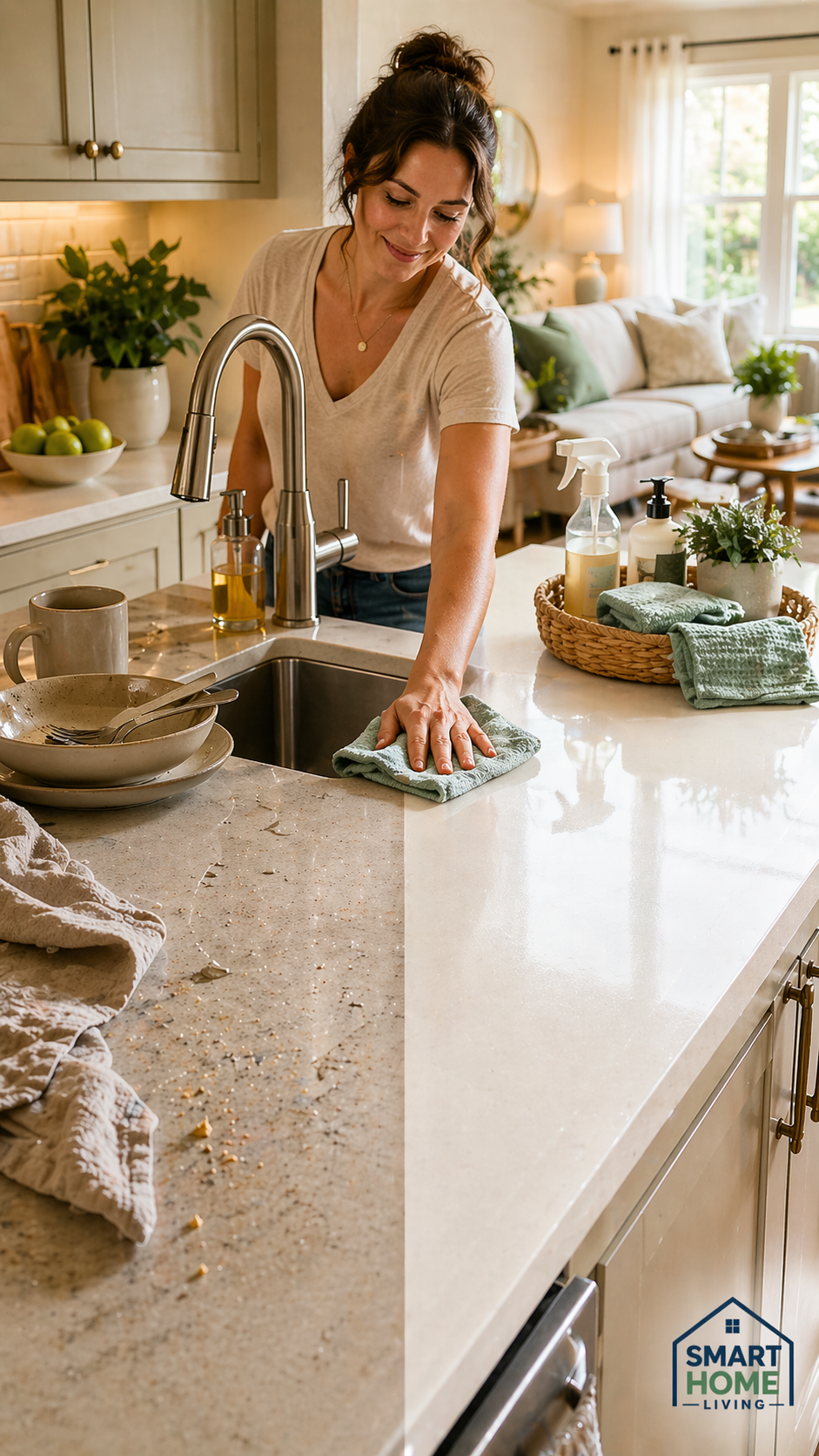
🏡 Introduction: When a Clean Kitchen Still Feels Off
There is a strange feeling many homeowners know too well. You wipe the counters, rinse the sink, move the dishes, straighten the towel, and step back expecting the kitchen to feel fresh. For a few minutes, it does. The light hits the countertop, the faucet shines, and everything looks like it is finally back under control.
Then, not long after, the same space starts to feel messy again.
Maybe there are no big piles of dishes. Maybe the floor is not covered in crumbs. Maybe the counters are technically wiped. But something still feels unfinished. The kitchen does not feel dirty in an obvious way, yet it does not feel truly clean either.
That is why more homeowners are starting to pay attention to one simple habit: how they reset the sink and counter area after everyday use.
The kitchen sink is one of the hardest-working areas in the home. It handles food scraps, coffee cups, wet cloths, soap, water spots, produce rinsing, cooking tools, and last-minute cleanup. Even when the rest of the kitchen looks decent, the sink area can quietly make the whole room feel tired, cluttered, or not fully clean.
The surprising part is that the problem is not always about cleaning harder. Many people are already cleaning enough. The issue is often the order, timing, and small habits around the sink.
A kitchen can look freshly wiped, but if the sponge is damp, the cloth is tossed beside the faucet, crumbs are left near the drain, or water spots dry across the counter, the room quickly loses that clean feeling.
This does not mean your kitchen has to be perfect. Real homes are lived in. Real kitchens get used. But there is a difference between a kitchen that looks naturally lived-in and one that feels like the mess keeps coming back no matter what you do.
The good news is that a few simple changes can make a big difference.
🧼 Why the Sink Area Controls the Feeling of the Whole Kitchen
The sink is usually the visual center of daily kitchen activity. Even in a beautiful kitchen, the eye naturally goes toward the sink, faucet, counter edge, and nearby tools. If that area looks clean, the kitchen often feels cleaner overall. If that area looks damp, cluttered, or stained, the whole kitchen can feel less fresh.
This is why some homes feel clean the moment you walk in. It is not because every corner is perfect. It is because the main visual zones are reset. The sink is clear. The counter is dry. The towels are folded or hanging properly. The soap bottle is not surrounded by water. The space feels ready to use again.
In many homes, the kitchen does not feel dirty because of one huge mess. It feels dirty because of several small things happening at the same time.
A few crumbs near the sink.
A wet dishcloth sitting on the counter.
Water rings around the faucet.
A sponge left in the basin.
A few dishes leaning near the drain.
Soap residue around the bottle.
A cutting board left out after lunch.
Each detail seems tiny on its own. But together, they send a message: this kitchen is not fully reset.
That is why the “cleaning more” approach often fails. You can spend time wiping the whole counter, but if the sink zone stays slightly messy, the space still feels unfinished.
The smarter approach is to focus on the area that creates the strongest visual impact.
🧽 The Common Habit That Makes Kitchens Feel Dirty Again
One of the most common habits is wiping the counter but leaving the cleaning tools and moisture behind.
Many people finish cleaning by quickly dragging a damp cloth across the counter. It seems helpful. The surface looks better immediately. But if the cloth is not rinsed properly, if it spreads crumbs instead of collecting them, or if the counter is left wet, the clean look fades fast.
A wet counter catches dust and crumbs more easily. Water spots dry around the faucet. The dish towel begins to smell musty if it stays bunched up. The sponge may sit in water. The sink may look dull even after rinsing.
This is the part many homeowners are starting to recheck. The final step matters more than people think.
A kitchen reset is not finished when the surface is wet. It is finished when the surface is clean, dry, and visually clear.
That small difference can change the entire feeling of the room.
Instead of thinking, “I wiped the counter, so I’m done,” the better habit is to ask:
Does the sink area look ready for the next use?
If the answer is no, the kitchen may still feel dirty even after cleaning.
🧴 Why “More Product” Is Not Always the Answer
When a kitchen still feels dirty, many people reach for stronger products, more spray, or extra scrubbing. Sometimes that is necessary, especially if there is grease, sticky residue, or old buildup. But for everyday home cleaning, the issue is often not a lack of product.
It is usually leftover moisture, scattered crumbs, and visual clutter.
Using too much cleaner can even make the surface feel worse. Some products leave a film if they are not wiped away properly. That film can attract dust, show streaks, or make counters look dull under natural light.
A clean kitchen should not smell overwhelmingly like chemicals. It should feel fresh, dry, and calm.
The goal is not to make the kitchen look like nobody lives there. The goal is to make it feel reset after normal daily use.
A simple routine can often work better than random deep cleaning.
🧺 The “Reset Zone” Method for a Cleaner Kitchen Feel
A smart way to approach kitchen cleaning is to create a reset zone. This means you focus first on the small area that influences the whole kitchen: the sink, faucet, counter edge, dish towel, sponge, and soap area.
Once this area is clean and dry, the kitchen usually feels much better even if the rest of the room is not perfect.
Start by removing anything that does not belong there. Cups, plates, utensils, food wrappers, and random items should be moved first. Then clear visible crumbs before spraying anything. This is important because wiping over crumbs with a wet cloth can smear them across the surface.
Next, clean the sink area and the counter around it. Pay attention to the faucet base because this is where water spots and residue often collect. After wiping, use a dry cloth to finish the surface.
That final dry wipe is the detail many people skip.
It makes the counter look brighter. It reduces streaks. It prevents water spots. It gives the kitchen that finished, polished feeling.
Then handle the cloth, sponge, and towel. A damp cloth left in a ball can make the kitchen feel less fresh. Hang it to dry, place it in the laundry, or keep it neatly folded if it is clean. The sponge should not sit in dirty water. The towel should look intentional, not forgotten.
This small routine takes only a few minutes, but it changes the look of the kitchen quickly.
🧹 Step-by-Step Guide: The 7-Minute Kitchen Reset
Here is a simple routine homeowners can use when the kitchen looks mostly clean but still feels messy.
Step 1: Clear the sink area first
Remove dishes, cups, utensils, and anything sitting around the faucet. Even a clean counter can look cluttered if the sink area is crowded.
Step 2: Pick up crumbs before spraying
Use a dry cloth, paper towel, or small brush to collect crumbs first. This keeps you from spreading food particles across the counter.
Step 3: Rinse the sink
Give the sink a quick rinse to remove loose residue. Focus around the drain and corners, where small bits often collect.
Step 4: Wipe the faucet base
The faucet base often holds water spots, soap residue, and tiny splashes. Cleaning this area instantly makes the kitchen look fresher.
Step 5: Clean the counter around the sink
Wipe the nearby counter space with a suitable cleaner for your surface. Keep it simple and avoid using too much product.
Step 6: Dry the surface
Use a clean dry cloth to remove moisture. This step gives the counter a finished look and helps prevent streaks.
Step 7: Reset the tools
Hang the towel, rinse or replace the cloth, move the sponge out of standing water, and keep the soap area neat.
| Kitchen Area | Common Problem | Better Habit |
|---|---|---|
| Sink basin | Food bits and dull residue | Rinse after use and clear the drain area |
| Faucet base | Water spots and soap marks | Wipe and dry daily |
| Counter edge | Crumbs and moisture | Collect crumbs before spraying |
| Dish towel | Damp and messy look | Hang or replace after use |
| Sponge | Sitting in dirty water | Rinse and let it dry properly |
| Soap bottle area | Sticky rings and splashes | Wipe under and around bottles |