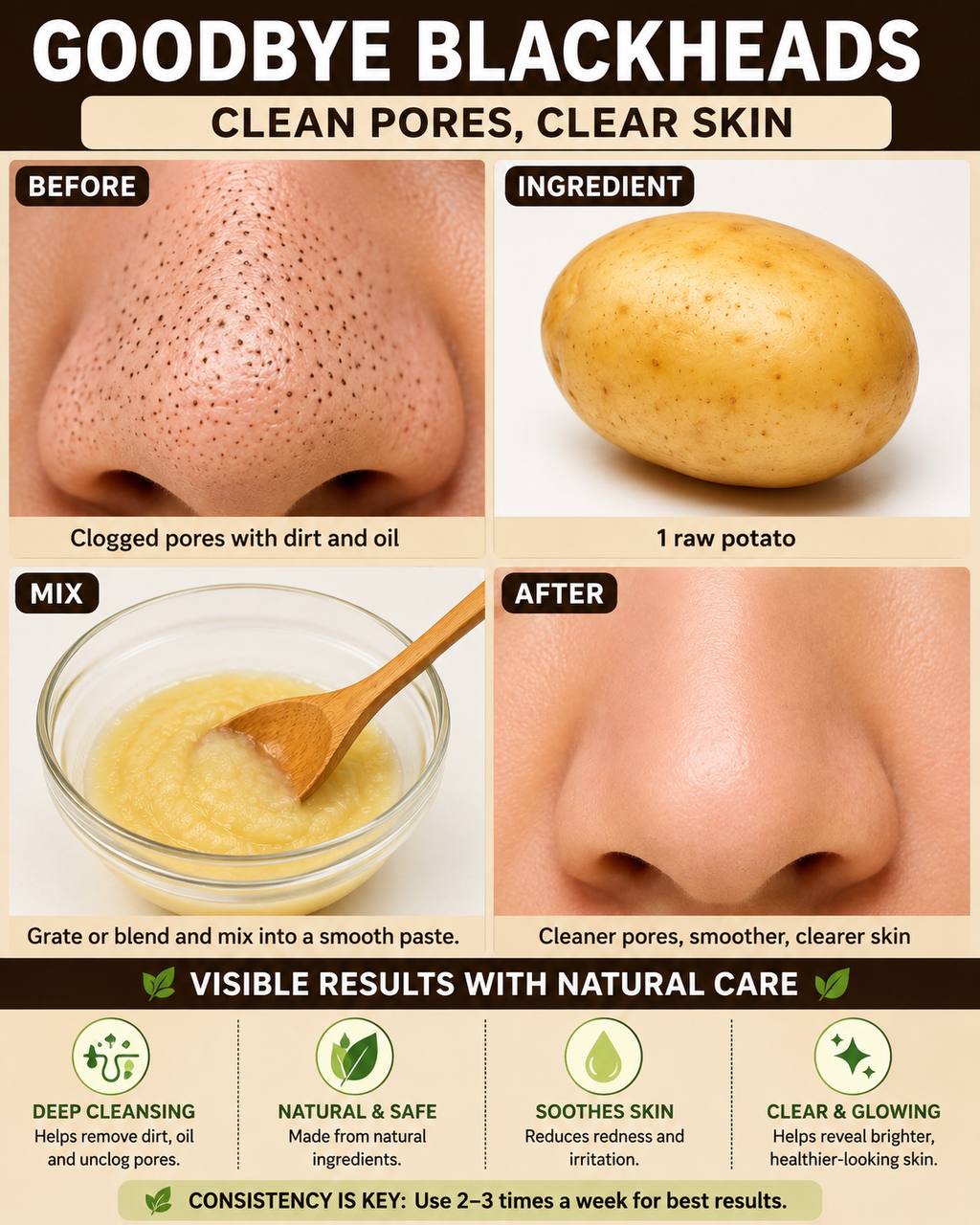
Instructions
- Select Your Potato: Choose a fresh, firm, raw potato. Russet or Yukon Gold varieties work well, but any common potato will suffice. Ensure it’s free from sprouts, green spots, or any signs of spoilage, as these can indicate higher levels of solanine, which may cause irritation.
- Wash and Peel: Thoroughly wash the potato under cool running water to remove any dirt or residue. While some recipes suggest leaving the peel on for extra nutrients, for a facial mask, it’s generally recommended to peel the potato to avoid potential pesticide residues or rough textures that could irritate sensitive skin.
- Prepare the Potato:
- Method 1: Grating: Using a fine grater, grate the potato into a small bowl. Grating creates a pulp with a slightly coarser texture, which some believe offers a gentle exfoliating effect.
- Method 2: Blending: Cut the peeled potato into small chunks. Place the chunks into a blender or food processor. Add a very small amount of purified water (just enough to help the blades move, usually 1-2 teaspoons) if needed to achieve a smooth, paste-like consistency. Blend until you have a fine, uniform paste, free of large lumps. This method typically yields a smoother mask, which might be preferred for sensitive skin.
- Achieve the Right Consistency: Regardless of the method chosen, the goal is a smooth, spreadable paste. It should not be too watery, as it will drip, nor too chunky, as it won’t adhere well to the skin. If it’s too watery, you can let it sit for a few minutes and gently drain off some of the excess liquid, or add a tiny pinch of a natural thickener like oat flour (though this is not part of the traditional recipe).
- Cleanse Your Face: Before applying the potato mask, thoroughly cleanse your face with a mild facial cleanser and lukewarm water. Pat your skin dry with a clean towel. This step ensures that your pores are free of surface dirt and makeup, allowing the mask to work more effectively.
- Perform a Patch Test: This is a crucial step. Apply a small amount of the potato paste to an inconspicuous area of your skin, such as behind your ear or on your inner forearm. Leave it on for 10-15 minutes, then rinse. Wait 24 hours to check for any signs of redness, itching, irritation, or allergic reaction. If no adverse reaction occurs, proceed with the full application.
- Apply the Mask: Using clean fingertips or a soft spatula, apply an even layer of the potato paste to the affected areas of your face, typically the T-zone (forehead, nose, and chin) where blackheads are most common. You can apply it to your entire face if desired, avoiding the delicate eye and lip areas.
- Relax and Wait: Leave the potato mask on for approximately 10 to 15 minutes. During this time, you might feel a slight tightening sensation as the mask begins to dry. Avoid making strong facial expressions to prevent cracking the mask.
- Rinse Off: After the recommended time, gently rinse off the mask with lukewarm water. Use circular motions as you rinse to provide a mild exfoliating effect. Ensure all traces of the potato paste are removed from your skin.
- Follow Up: Pat your face dry with a clean, soft towel. Follow with your regular moisturizer to hydrate your skin.
- Frequency: For best results, it is suggested to use this potato blackhead mask 2-3 times a week. Consistency is believed to be key to seeing any potential improvements in skin clarity and texture.
Cooking Tips and Variations
When it comes to preparing your potato blackhead mask, “cooking” refers more to the preparation technique than actual heat application. Achieving the right consistency is paramount. If you’re using a grater, opt for the finest setting to produce a pulp that can adhere easily to the skin without being too rough. If blending, ensure you use minimal water; the goal is a thick, spreadable paste, not a liquid. A slightly thicker consistency will stay on the skin better and provide a more concentrated application. Always use fresh, raw potatoes, as cooked potatoes will not have the same purported active enzymes or starch structure.
For variations, while the core recipe is simple potato, some natural skincare enthusiasts suggest adding other ingredients to enhance its effects. For instance, a small amount of honey can be mixed in for its antibacterial and moisturizing properties, which could complement the potato’s cleansing action. A teaspoon of lemon juice (use with extreme caution, as it can cause photosensitivity and irritation) is sometimes added for its purported brightening effects, but this is generally not recommended for sensitive skin or before sun exposure. For a gentle exfoliating boost, a tiny pinch of finely ground oatmeal could be incorporated. However, for your first few applications, it’s best to stick to the pure potato mask to assess your skin’s reaction to the primary ingredient.
Storage and Reheating
This potato blackhead mask is best prepared fresh for each use. Raw potato paste, like many fresh fruit and vegetable preparations, oxidizes quickly and can lose its efficacy. More importantly, it can become a breeding ground for bacteria if left at room temperature or even refrigerated for too long. The enzymes and starches in raw potato are most active when fresh. Therefore, it is strongly advised to make a fresh batch of potato paste every time you plan to use the mask.
Do not prepare a large batch and store it for later use. Any leftover potato paste should be discarded immediately after application. There is no “reheating” equivalent for this type of fresh mask; the idea is to use it once, while its components are at their peak freshness and potency. Using old or discolored potato paste could not only be less effective but potentially introduce unwanted bacteria to your skin, leading to more issues rather than solving blackheads.
Frequently Asked Questions
What kind of potato is best for a blackhead mask?
While any fresh, raw potato can be used, many prefer common varieties like Russet or Yukon Gold due to their starch content and availability. The most important factor is to ensure the potato is raw, firm, and free from green spots or sprouts, which contain higher levels of solanine that could irritate the skin. Always wash and peel the potato before preparation.
How often should I use the potato blackhead mask?
For best results, the recommendation is to use the potato blackhead mask 2-3 times a week. Consistency is often cited as key for natural remedies. However, it’s crucial to pay attention to your skin’s reaction. If you experience any irritation, redness, or dryness, reduce the frequency of use or discontinue altogether. A patch test before full application is always recommended.
Can I leave the potato mask on overnight?
No, it is not recommended to leave the potato blackhead mask on overnight. Most facial masks, especially those made with fresh ingredients, are designed for short-duration application (typically 10-15 minutes). Leaving raw potato on your skin for an extended period, such as overnight, increases the risk of irritation, particularly due to the presence of solanine. It could also lead to dryness or other adverse reactions. Always rinse off the mask thoroughly after the recommended time.
Will the potato mask completely eliminate my blackheads?
While proponents suggest that potato masks can help cleanse pores and reduce the appearance of blackheads, it’s important to set realistic expectations. The efficacy of potatoes for blackheads is largely anecdotal and not backed by robust scientific evidence. It may offer a temporary improvement in skin texture and clarity for some, but it is unlikely to completely eliminate persistent or severe blackheads. For significant or recurring blackhead issues, consulting a dermatologist for scientifically proven treatments is advisable.