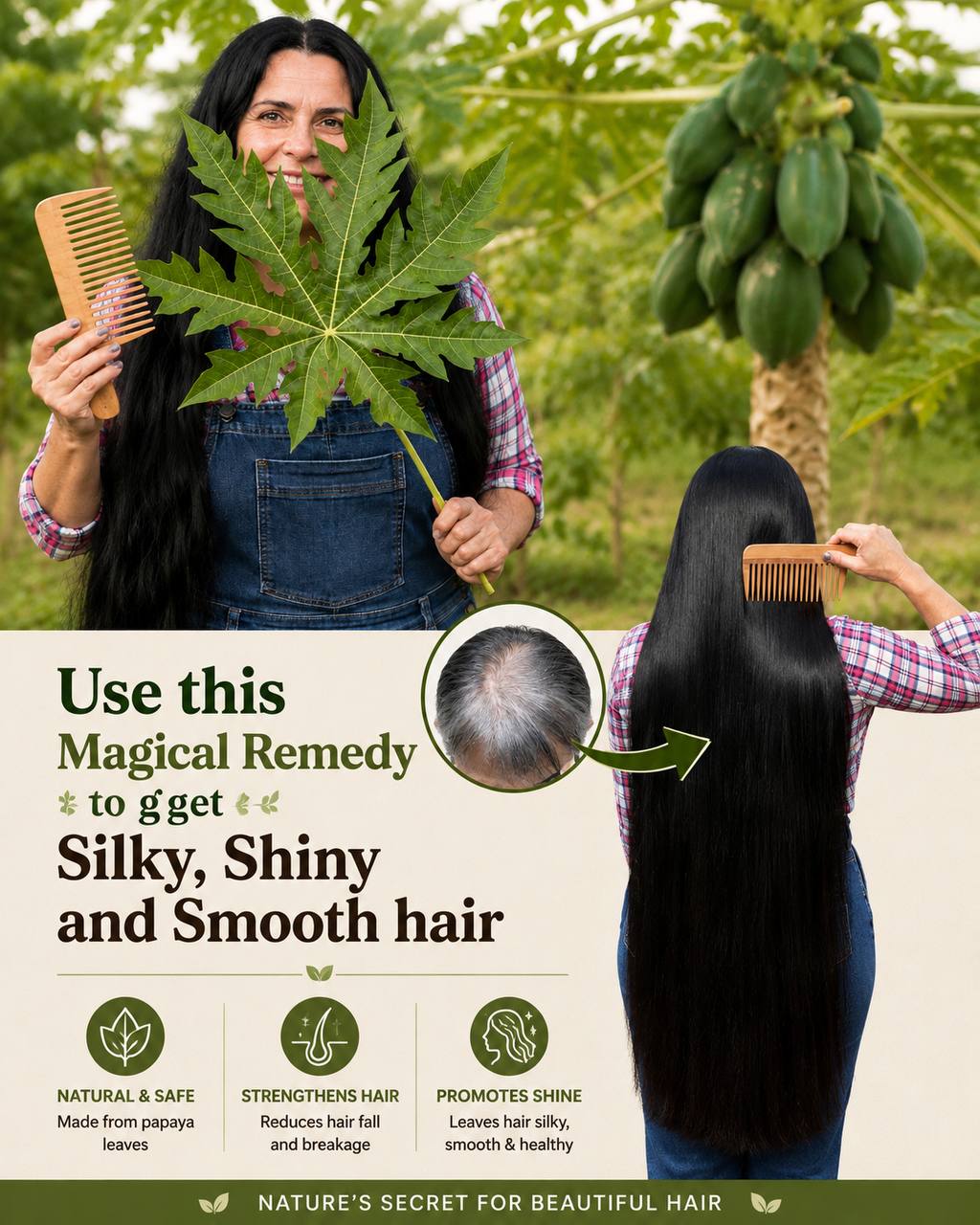
Instructions
- Select and Clean Papaya Leaves: Choose fresh, green, healthy papaya leaves, free from blemishes or damage. Thoroughly wash the papaya leaves under cool running water to remove any dirt, dust, or pesticides. Pat them dry with a clean cloth.
- Prepare the Leaves: Carefully remove the thick central veins from each papaya leaf. You can do this by folding the leaf in half and gently tearing or cutting the vein away. This step ensures a smoother paste and easier blending.
- Chop the Leaves: Roughly chop the cleaned and de-veined papaya leaves into smaller pieces. This will help them blend more easily and create a finer paste.
- Blend the Leaves: Place the chopped papaya leaves into a blender. Add 1 cup of filtered water. Start blending on a low setting and gradually increase the speed. Blend until you achieve a smooth, bright green paste. If the mixture is too thick, add water in small increments (1 tablespoon at a time) until you reach a consistency that is easy to apply to the scalp and hair.
- Strain the Mixture (Optional, for a smoother liquid): For a smoother liquid that’s easier to distribute and rinse, you can strain the blended paste. Place a fine-mesh sieve or cheesecloth over a bowl and pour the blended mixture through it. Press down on the solids with a spoon to extract as much liquid as possible. Discard the fibrous pulp. If you prefer a thicker mask, skip this step.
- Add Optional Ingredients: If desired, stir in 2 tablespoons of your chosen carrier oil (like coconut or olive oil) and 5-7 drops of essential oil (such as rosemary or lavender) into the papaya leaf paste or liquid. Mix thoroughly to combine all ingredients.
- Prepare Your Hair: Ensure your hair is clean and slightly damp. You can wash your hair beforehand with a mild shampoo and towel-dry it so it’s not dripping wet. This allows for better absorption of the treatment.
- Apply to Scalp: Section your hair to expose your scalp. Using your fingertips, gently massage the papaya leaf mixture directly onto your scalp. Pay particular attention to areas where you experience thinning hair or scalp issues. The massaging action helps stimulate blood circulation and ensures the nutrients penetrate the follicles.
- Apply to Hair Strands: Once your scalp is covered, work the remaining mixture through the lengths of your hair, from roots to tips. Ensure all strands are coated.
- Cover and Wait: Once applied, gather your hair and cover it with a shower cap or a warm towel. This creates a warm, moist environment that helps the ingredients penetrate more effectively. Leave the treatment on for 30-45 minutes.
- Rinse Thoroughly: After the recommended time, rinse your hair thoroughly with cool or lukewarm water. Make sure to remove all traces of the papaya leaf mixture. You may need to use a mild, sulfate-free shampoo to ensure your hair is completely clean, especially if you added carrier oils.
- Condition (Optional): Follow up with a light conditioner if your hair feels dry or tangled after rinsing.
- Dry and Style: Gently towel-dry your hair and allow it to air dry or style as usual.
Cooking Tips and Variations
While we’re not “cooking” in the traditional sense, these tips will enhance your papaya leaf hair treatment experience. For best results, always use fresh, vibrant green papaya leaves. Avoid leaves that are yellowing or show signs of disease, as their potency will be diminished. When blending, a high-speed blender will yield the smoothest paste or liquid, which is easier to apply and rinse out. If you don’t have a blender, you can finely chop the leaves and pound them in a mortar and pestle, then add water and strain for the liquid extract.
To boost the benefits, consider incorporating other beneficial natural ingredients. For extreme dryness, increase the amount of carrier oil to 3-4 tablespoons. For enhanced hair growth stimulation, add a teaspoon of fresh ginger juice to the blend. If dandruff is your primary concern, a tablespoon of apple cider vinegar can be mixed in (ensure to dilute it well if adding directly to the blend or use it as a pre-rinse). For a deeply nourishing mask, combine the papaya leaf paste with a ripe avocado and a tablespoon of honey. Always remember to mix thoroughly to ensure an even distribution of ingredients.
The frequency of application is key to seeing results. For weak hair and scalp issues, aim for 1-2 times a week. Once your hair health improves, you can reduce it to once every two weeks for maintenance. Consistency over time will yield the most noticeable and lasting benefits. Pay attention to how your hair and scalp respond; adjust the frequency and any added ingredients based on your individual needs. Remember, natural remedies often work gradually, so patience is a virtue.
Storage and Reheating
Since this is a topical hair treatment, “reheating” isn’t applicable, but proper storage is crucial for maintaining its efficacy. It is highly recommended to prepare a fresh batch of papaya leaf treatment each time you plan to use it. The active enzymes and vitamins in papaya leaves are most potent when fresh and tend to degrade quickly once the leaves are blended and exposed to air.
If you absolutely must prepare a larger batch, store any leftover liquid or paste in an airtight container in the refrigerator immediately after preparation. It can be stored for a maximum of 24-48 hours. Beyond this time, the mixture may lose its potency and could potentially spoil, leading to an unpleasant smell or reduced effectiveness. Before using a stored batch, give it a good stir. Discard any mixture that develops an off-color, strange odor, or shows signs of fermentation. For the best and safest results, always opt for freshly prepared treatment.
Frequently Asked Questions
How long does it take to see results from using papaya leaf hair treatment?
Results can vary greatly depending on individual hair type, the severity of the hair issue, and consistency of use. Some individuals might notice an improvement in hair texture and shine within a few weeks, while significant changes in hair growth or reduction in hair fall might take 2-3 months of regular application (1-2 times per week). Patience and consistency are key for natural remedies.
Can papaya leaf treatment be used on colored or chemically treated hair?
Generally, papaya leaf treatment is safe for colored or chemically treated hair. However, it’s always advisable to perform a patch test on a small, inconspicuous section of hair first to ensure there’s no adverse reaction or color stripping. The natural enzymes are mild, but individual sensitivities can vary. If you have concerns, consult with your hairstylist.
Are there any side effects or precautions to consider?
Papaya leaf treatment is largely safe for topical use. The most common precaution is to perform a patch test on a small area of your skin (e.g., behind the ear or inner arm) 24 hours before applying it to your entire scalp, to check for any allergic reactions or skin sensitivities like redness, itching, or irritation. Avoid getting the mixture into your eyes, and rinse immediately with water if contact occurs. If you have any open wounds or severe scalp conditions, it’s best to consult a dermatologist before using.
Can I use dried papaya leaves instead of fresh ones?
While fresh papaya leaves are highly recommended for their maximum potency of enzymes and vitamins, dried papaya leaves can be used as an alternative if fresh ones are unavailable. To use dried leaves, you would typically steep them in hot water to create a strong infusion, then let it cool before applying. However, the efficacy might be slightly reduced compared to fresh leaves. If using dried leaves, ensure they are high quality and free from mold or contaminants.