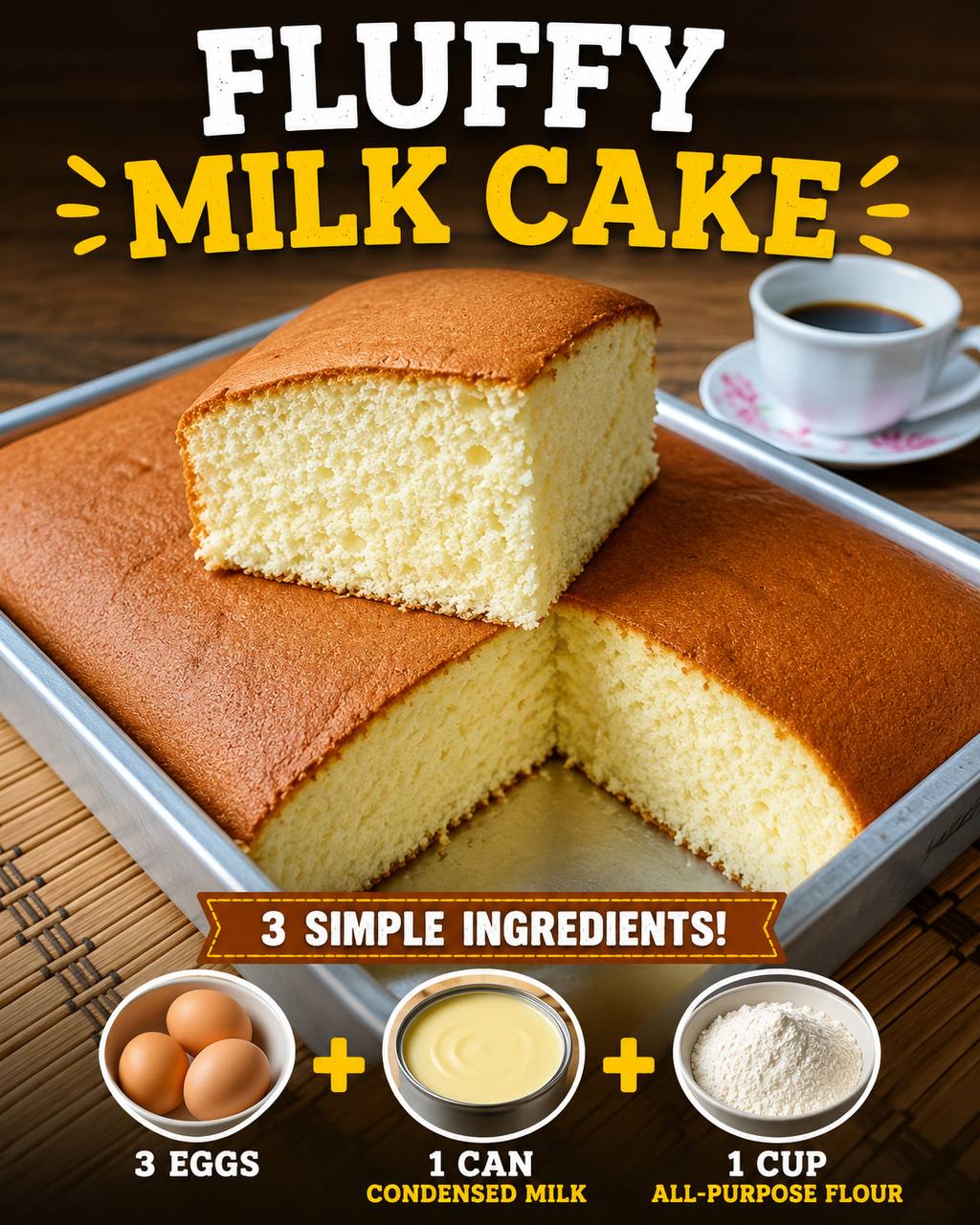
Instructions
- Preheat your oven to 325°F (160°C). Prepare a 9×13 inch rectangular baking pan by lightly greasing it with butter or baking spray, then dust it evenly with flour, tapping out any excess. This ensures your delicate cake won’t stick.
- Separate the egg whites and yolks into two large, clean bowls. Ensure there is absolutely no yolk in the egg whites, as this can prevent them from whipping properly.
- In the bowl with the egg yolks, add the entire can of sweetened condensed milk, the vanilla extract (if using), and the pinch of salt (if using). Whisk these ingredients together until they are well combined and the mixture is smooth and pale yellow.
- Gradually add the sifted all-purpose flour to the egg yolk and condensed milk mixture. Mix gently with a spatula or whisk until just combined. Be careful not to overmix; overmixing can develop the gluten in the flour too much, leading to a tougher cake rather than a fluffy one. Set this mixture aside.
- Now, it’s time to whip the egg whites. Using an electric mixer (handheld or stand mixer with a whisk attachment) on medium-high speed, beat the egg whites until soft peaks form. Continue beating until stiff, glossy peaks form. The egg whites should hold their shape when the whisk is lifted. This step is crucial for the cake’s signature airy texture.
- Gently fold about one-third of the whipped egg whites into the egg yolk and condensed milk mixture. Do this carefully with a spatula, using a cutting and folding motion, until no streaks of egg white remain. This lightens the yolk mixture and makes it easier to incorporate the remaining whites without deflating them.
- Add the remaining whipped egg whites to the mixture. Continue to gently fold them in until the batter is homogenous and light, with no visible streaks of egg white. Again, be very careful not to overmix, as you want to preserve as much of that precious air as possible.
- Pour the delicate batter into your prepared baking pan, spreading it evenly with your spatula.
- Bake for 30-35 minutes, or until the cake is golden brown on top and a wooden skewer or toothpick inserted into the center comes out clean. The cake will be beautifully puffed up while baking.
- Once baked, remove the cake from the oven and let it cool in the pan on a wire rack for about 10-15 minutes. This allows the cake to set slightly and prevents it from tearing when removed.
- After cooling slightly in the pan, carefully invert the cake onto the wire rack to cool completely. If you prefer, you can also serve it directly from the pan once it has cooled enough to handle.
- Slice and serve your fluffy Cotton Cake plain, or with your favorite accompaniments like fresh berries, a dusting of powdered sugar, or a light drizzle of honey.
Cooking Tips and Variations
To achieve the ultimate fluffiness, ensure your eggs are at room temperature. Cold eggs don’t whip up as voluminous as room temperature eggs. When separating the whites and yolks, be meticulous; even a tiny bit of yolk can prevent the whites from reaching stiff peaks. Use a very clean, grease-free bowl for whipping egg whites. Any residual fat can be a deterrent to volume.
The folding technique is paramount. Think of it as gently incorporating air, not aggressively stirring. Use a wide rubber spatula and a motion that cuts through the center of the batter, then sweeps up the mixture from the bottom and over the top. Rotate the bowl as you fold. Stop as soon as the ingredients are combined to avoid deflating the egg whites.
For a subtle flavor boost, consider adding 1/2 teaspoon of lemon or orange zest to the egg yolk mixture. You could also swirl in a few tablespoons of fruit jam (like raspberry or apricot) into the batter just before baking for a delightful surprise in every bite. A touch of almond extract instead of, or in addition to, vanilla can also add a lovely complexity. For a slightly richer cake, you can gently fold in 1/4 cup of melted unsalted butter into the egg yolk mixture before adding the flour, though this will slightly alter the “3-ingredient” purity.
Don’t open the oven door too early during baking, especially in the first 20 minutes, as the sudden change in temperature can cause the cake to sink. The cake is done when it’s golden brown, springs back lightly when touched, and a toothpick inserted into the center comes out clean. If the top is browning too quickly, you can loosely tent it with aluminum foil.
This cake is wonderfully versatile for serving. Enjoy it simply with a cup of coffee or tea, as suggested by its perfect pairing. For a more elegant presentation, dust it with powdered sugar, serve with a dollop of whipped cream, or alongside a medley of fresh seasonal berries. A simple glaze made from powdered sugar and a touch of milk or lemon juice can also elevate its appearance and add a hint of sweetness.
Storage and Reheating
To keep your Cotton Cake at its best, store it in an airtight container at room temperature for up to 2-3 days. The delicate, airy texture is best enjoyed fresh, but it will maintain its deliciousness for a short period. For longer storage, you can refrigerate the cake for up to 5 days. Be aware that refrigeration can sometimes alter the texture slightly, making it a bit firmer.
While this cake is best enjoyed at room temperature, if you’ve refrigerated it, you can allow slices to come to room temperature for about 15-20 minutes before serving. Reheating is generally not recommended for this type of cake, as it can dry out the delicate crumb and diminish its signature fluffiness. If you must, a very brief warm-up in a microwave (5-10 seconds per slice) might be acceptable, but proceed with caution to avoid over-drying.
For optimal freshness, consider baking this cake closer to when you plan to serve it. If you have a larger cake and wish to store portions, wrapping individual slices tightly in plastic wrap before placing them in an airtight container can help preserve their moisture and prevent them from absorbing odors from the refrigerator.
Can I make this cake ahead of time?
Yes, you can prepare this Cotton Cake one day in advance. Store it in an airtight container at room temperature. While it’s best enjoyed fresh on the day it’s baked, its delightful texture holds up well for about 24 hours. If you need to store it longer, refrigeration is an option, but bring it back to room temperature before serving for the best experience.
Why did my cake turn out dense instead of fluffy?
A dense cake is usually a sign of deflated egg whites. This can happen if the egg whites were not whipped to stiff peaks, if there was any grease in the bowl or on the whisk, or most commonly, if the egg whites were overmixed or folded too vigorously into the yolk mixture. Remember to be gentle when folding to preserve the air you’ve whipped into the whites.
Can I use different types of flour?
For the best results and the signature “cotton” texture, all-purpose flour is highly recommended as it provides the right balance of gluten. While you could experiment with cake flour for an even finer crumb, using whole wheat flour or gluten-free alternatives might significantly alter the texture and require adjustments to the liquid content, potentially compromising the desired fluffiness.
What if I don’t have an electric mixer for the egg whites?
While an electric mixer makes whipping egg whites much easier and faster, it is possible to do it by hand with a whisk and a lot of arm strength! It will take significantly longer, likely 10-15 minutes of continuous whisking, but it is achievable. Ensure your bowl is stable and you maintain a consistent, vigorous motion until stiff peaks form.