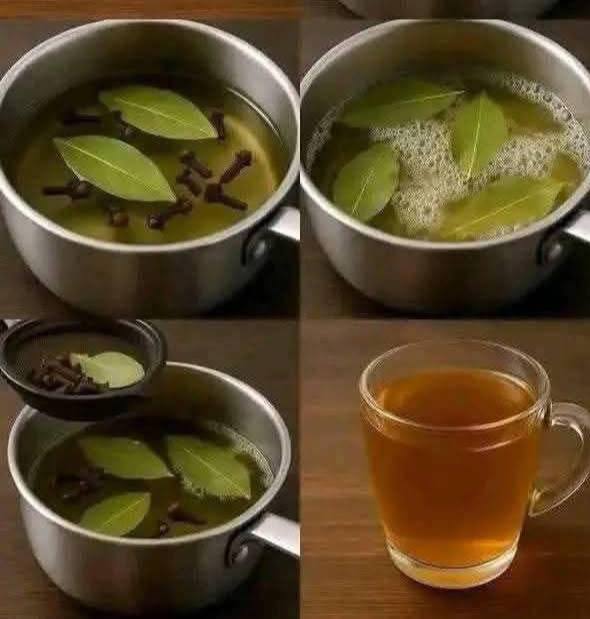
Instructions
- Prepare the Ingredients: Gather your bay leaves and whole cloves. Ensure your bay leaves are fresh or dried, and your cloves are whole, not ground, for the best flavor extraction.
- Combine in a Saucepan: Pour 2 cups of filtered water into a small saucepan. Add the 2-3 dried bay leaves (or 4-5 fresh bay leaves) and the 5-7 whole cloves to the water.
- Bring to a Simmer: Place the saucepan over medium heat. Bring the mixture to a gentle simmer. You’ll see small bubbles forming around the edges of the pan and the water will begin to steam. Avoid a rolling boil, as this can sometimes make the tea taste bitter.
- Steep and Infuse: Once the mixture reaches a gentle simmer, reduce the heat to low, or remove the saucepan from the heat entirely. Cover the saucepan with a lid. Allow the bay leaves and cloves to steep and infuse their flavors into the hot water for 5-10 minutes. For a stronger tea, you can steep for a longer duration, up to 15 minutes. Covering the pan helps to trap the aromatic compounds, ensuring a more flavorful brew.
- Strain the Tea: Place a fine-mesh sieve over your mug or teapot. Carefully pour the steeped tea through the sieve, catching all the bay leaves and whole cloves. Discard the solids.
- Sweeten (Optional): If desired, stir in 1-2 teaspoons of your preferred sweetener, such as honey or maple syrup, while the tea is still hot. Adjust the amount to your taste.
- Serve and Enjoy: Pour the hot Bay Leaf and Clove Herbal Tea into your favorite mug. Garnish with a fresh lemon slice, if using. Sip slowly and enjoy the comforting aroma and soothing warmth of your homemade herbal infusion.
Cooking Tips and Variations
Achieving the perfect cup of Bay Leaf and Clove Herbal Tea is a delightful journey, and a few simple tips can elevate your brewing experience. Firstly, the quality of your ingredients truly matters. Always opt for fresh, clean water, as its taste significantly impacts the final flavor of your tea. When selecting bay leaves, look for whole, unbroken leaves that have a vibrant green color if fresh, or a rich, earthy green if dried. For cloves, ensure they are whole and plump; ground cloves will result in a cloudy tea and a different flavor profile. The freshness of your spices directly correlates to the potency of their aromatic compounds, leading to a more fragrant and flavorful brew.
When it comes to the brewing process, don’t over-boil the water. A gentle simmer is ideal for extracting the flavors from the bay leaves and cloves without causing the tea to become bitter. A rolling boil can sometimes break down the delicate compounds, leading to a less nuanced taste. Steeping time is another crucial factor; it’s a matter of personal preference. For a milder tea, steep for 5-7 minutes. If you prefer a more robust and intense flavor, extend the steeping time to 10-15 minutes. Always cover your saucepan while steeping. This isn’t just to keep the tea hot; it traps the volatile aromatic oils released by the spices, ensuring that all those wonderful fragrances end up in your cup, not escaping into the air.
This Bay Leaf and Clove Herbal Tea is wonderfully versatile and can be customized to suit your palate. While delicious on its own, many find that a touch of sweetness enhances its comforting qualities. Natural sweeteners like honey, maple syrup, or even a few drops of stevia are excellent choices. For an added layer of flavor and potential benefits, consider incorporating other spices or aromatics. A small piece of fresh ginger, thinly sliced or lightly crushed, can add a zesty warmth and a subtle spicy kick. A stick of cinnamon, steeped along with the bay leaves and cloves, will introduce a sweet, woody note that complements the existing flavors beautifully. A slice of lemon or a squeeze of fresh lemon juice added after straining can brighten the tea with a refreshing tang. For those who enjoy a hint of citrus, orange peel can also be a lovely addition during the steeping process. Experiment with these variations to discover your perfect blend!
Storage and Reheating
This Bay Leaf and Clove Herbal Tea is best enjoyed fresh and hot, immediately after brewing, to savor its full aroma and flavor. However, if you find yourself with extra tea or wish to prepare a larger batch for convenience, it can be stored. Allow any leftover tea to cool completely to room temperature before transferring it to an airtight container or a glass jar. Store it in the refrigerator for up to 1-2 days. Beyond this timeframe, the flavors may start to diminish, and the tea might lose some of its freshness.
When you’re ready to enjoy your stored tea, reheating is simple. You can gently warm it in a saucepan over low heat until it reaches your desired temperature. Be careful not to boil it vigorously, as this can degrade the delicate flavors. Alternatively, you can reheat individual servings in the microwave for 30-60 seconds, or until warm. While reheating, you might notice that the aroma is slightly less potent than when freshly brewed, but the comforting taste will still be present. If you prefer, adding a fresh bay leaf or a few whole cloves to the cold tea before reheating can help revive some of the lost fragrance, though it’s not strictly necessary.
Frequently Asked Questions
Can I use ground bay leaves or ground cloves for this tea?
While technically possible, it is highly recommended to use whole bay leaves and whole cloves for this herbal tea. Ground spices will make the tea cloudy and can result in a gritty texture, even after straining. More importantly, whole spices release their volatile oils and flavors more slowly and evenly during steeping, leading to a clearer, more nuanced, and less bitter taste. Ground spices tend to release their flavors too quickly and can easily overpower the tea.
Are there any health benefits associated with bay leaf and clove tea?
Bay leaves and cloves are traditionally known for various properties, including their antioxidant content and potential anti-inflammatory effects. Bay leaves are sometimes used in folk medicine for digestive issues, while cloves are well-regarded for their antiseptic and pain-relieving qualities. However, this recipe is presented as a comforting and aromatic beverage, and any health claims should be discussed with a healthcare professional. Enjoy it primarily for its soothing warmth and delightful flavor.
Can I make a larger batch of this tea to last for several days?
Yes, you can certainly scale up the recipe to make a larger batch. Simply multiply the ingredients proportionally (e.g., for 4 cups of tea, use 4-6 bay leaves and 10-14 whole cloves). Once brewed, allow the tea to cool completely, then store it in an airtight container in the refrigerator for up to 1-2 days. Keep in mind that the flavor may mellow slightly over time, so you might want to add a fresh garnish like a lemon slice when serving chilled or reheated portions.
What can I do if my tea tastes too strong or too weak?
If your tea tastes too strong, it likely steeped for too long. For your next batch, reduce the steeping time by a few minutes. You can also try using fewer bay leaves or cloves. If it tastes too weak, conversely, try steeping it for a longer duration, up to 15 minutes. Ensure your saucepan is covered during steeping to maximize flavor extraction. You can also increase the number of bay leaves or cloves slightly to achieve a more robust flavor profile.